
House and Lot vs Condominium for OFWs: Which Property Is the Better Investment?
July 31, 2026

House and Lot vs Condominium: Which Is Better for OFWs?
For many Overseas Filipino Workers (OFWs), owning a property in the Philippines is more than just a dream—it's a major financial milestone. Whether you're planning for your family's future, preparing for retirement, or building wealth through real estate, choosing the right property is one of the most important decisions you'll make.
One of the biggest questions OFWs face is:
Should you buy a house and lot or a condominium?
Both property types offer unique advantages depending on your goals, budget, and long-term plans. This guide compares the two to help you decide which option best fits your needs.
Condominium
Condominiums can also appreciate, especially when located in prime business districts or near commercial centers, universities, and transportation hubs.
Value is often influenced by:
Developer reputation
Building amenities
Accessibility
Demand in the area
Condominiums may appreciate more slowly than land in some locations, but premium developments often maintain strong market demand.
2. Maintenance Responsibilities
House and Lot
Owning a house means you're responsible for nearly everything, including:
Roof repairs
Exterior maintenance
Plumbing
Landscaping
Security improvements
For OFWs living abroad, maintenance can become challenging if no family member is managing the property.
Condominium
One of the biggest advantages of a condominium is convenience.
The condominium corporation typically handles:
Building maintenance
Common areas
Elevators
Security
Landscaping
Amenities
Owners simply pay monthly association dues.
For busy OFWs, this "lock-and-leave" lifestyle is a major advantage.
3. Rental Income Opportunities
House and Lot
Rental demand depends greatly on location.
A house may generate stable long-term rental income from families but often has:
Longer vacancy periods
Higher maintenance costs
Fewer short-term rental opportunities
Condominium
Condominiums are popular among:
Young professionals
Students
Expats
Digital nomads
Small families
Units in prime locations often enjoy strong rental demand and may produce consistent income.
Many investors also use condominiums for long-term leasing or short-term rentals where local regulations permit.
4. Lifestyle and Convenience
House and Lot
Ideal for buyers who value:
More living space
Private parking
Backyard or garden
Room for future expansion
Greater privacy
This is often the preferred choice for growing families.
Condominium
Perfect for buyers who prioritize convenience.
Many developments offer:
Swimming pools
Fitness centers
Function rooms
Children's play areas
24/7 security
Commercial establishments nearby
Condominiums also reduce commuting time when located near workplaces and business districts.
5. Long-Term Value
House and Lot
A house and lot typically performs well as a long-term family asset because land is limited and tends to appreciate over time.
Benefits include:
Strong inheritance value
Greater flexibility
Potential redevelopment opportunities
Higher resale potential in growing communities
Condominium
A condominium can still be an excellent long-term investment, particularly when:
It is developed by a reputable developer.
It is located in a high-demand area.
The building is well maintained.
Rental demand remains strong.
While the building ages, desirable locations often continue attracting buyers and tenants.
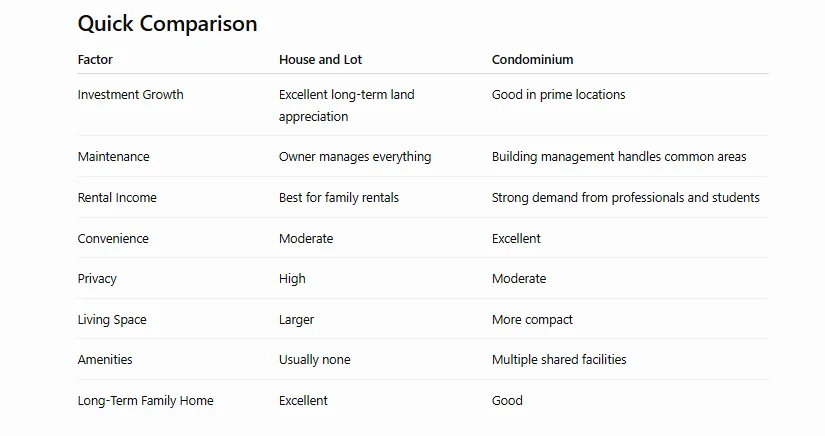
Which Property Is Better for OFWs?
There isn't a one-size-fits-all answer.
A house and lot may be the better choice if you:
Plan to return permanently to the Philippines
Want more space for your family
Prefer long-term land appreciation
Intend to build your forever home
A condominium may be ideal if you:
Want a low-maintenance investment
Prefer a property that's easier to manage while abroad
Plan to earn rental income
Value convenience and modern amenities
Need a property in a prime city location
Final Thoughts
Whether you choose a house and lot or a condominium, the best investment is one that aligns with your financial goals, lifestyle, and future plans.
For OFWs, it's also important to evaluate factors such as the developer's track record, the property's location, financing options, and expected long-term costs. Taking time to compare your options can help you make a more informed decision and maximize the value of your investment.
If you're considering buying property in Cebu, working with a trusted real estate partner can help you identify developments that match your budget and investment objectives, making your journey toward homeownership smoother and more rewarding.